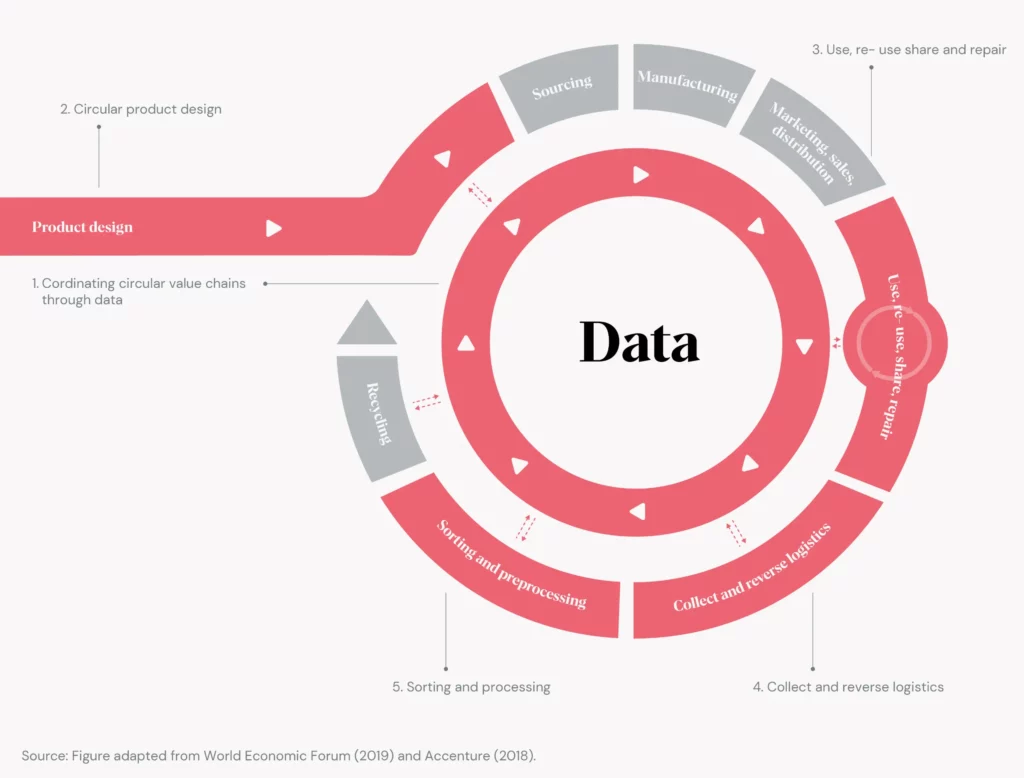
Let's be honest. The old sales playbook—make it, sell it, forget it—is gathering dust. Today, a quiet revolution is reshaping how we think about value, ownership, and stuff itself. It’s the shift to a circular economy, and its most powerful engine is the Product-as-a-Service (PaaS) model. But here’s the deal: selling access over ownership, performance over a physical box, requires a completely different mindset. Your sales strategy can't just be tweaked; it needs to be reimagined. So, let's dive into the tactics that actually work when your product never really gets sold. From Transaction to Relationship: The Core Shift Think of it like this. Traditional sales is a sprint—you cross the finish line (the close) and celebrate. Selling a service in a circular model? It’s a marathon y...
Read MoreCategory: Sales
Let’s be honest. The old sales playbook is gathering dust. Static PDFs, one-way webinars, and "contact us" forms that feel like shouting into the void? They’re not cutting it anymore. Your prospects are overwhelmed, distracted, and frankly, a little bored. To engage them—to truly qualify them—you need to stop talking at them and start creating with them. That’s where the magic of interactive content and micro-experiences comes in. Think of it this way: if traditional content is a monologue, interactive content is a conversation. And those small, focused micro-experiences? They’re the quick, meaningful handshakes that build rapport faster than any email blast ever could. Why "Interactive" Isn't Just a Buzzword Sure, you’ve heard the term. But what does it actually do for sales qua...
Read MoreLet’s be honest. Selling software today is tough. The market’s crowded, features get copied, and customers are savvier—and more budget-conscious—than ever. So, where do you find a sustainable, scalable revenue stream that also locks in customer loyalty? Well, look under the hood. For many of the most successful tech companies, the real magic isn’t just in the core product. It’s in the monetization of APIs and platform integrations. This isn't a side hustle; it's becoming a core sales strategy. It’s about transforming your product from a closed tool into an open, revenue-generating ecosystem. Why Your API is a Revenue Channel, Not Just a Tech Spec Think of your API (Application Programming Interface) as a universal adapter plug. It lets other systems connect to your software’s pow...
Read MoreLet’s be honest. Traditional sales funnels are getting… noisy. And expensive. You’re competing for attention in crowded ad spaces, sending emails into the void, and honestly, customers are just tuning out. They don’t trust your polished messaging half as much as they trust a recommendation from someone like them. That’s where community-led growth comes in. It’s not just a buzzword. For a growing number of savvy companies, it’s becoming the primary engine for sales. Think of it less like a megaphone and more like a garden. You don’t shout at plants to grow. You cultivate the soil, provide the right nutrients, and let the ecosystem do its thing. Your community is that fertile ground where trust—and revenue—grows organically. What Exactly is Community-Led Growth (CLG)? At its core, ...
Read MoreNeurodiversity-Inclusive Sales Team Management: Unlocking Potential Through Better Communication
Let’s be honest. For years, sales management has been built on a one-size-fits-all playbook. The same high-energy huddles, the same rigid communication scripts, the same definition of what a "natural" salesperson looks like. But what if that model is leaving immense talent—and revenue—on the table? That’s where neurodiversity-inclusive management comes in. It’s not about charity or checking a box. It’s a strategic shift. A way to build a sales team that’s more innovative, more resilient, and honestly, more human. Here’s the deal: by rethinking how we manage and communicate, we can create an environment where every brain can thrive and drive results. What Neurodiversity Really Means in Sales Neurodiversity is the idea that neurological differences—like Autism, ADHD, Dyslexia, and ...
Read MoreLet’s be honest. The old sales playbook is gathering dust. For decentralized and Web3 organizations—think DAOs, protocol teams, decentralized apps—the traditional, top-down sales enablement model just… doesn’t fit. You can’t “enable” a sales team that doesn’t exist in a traditional sense. Your “salespeople” might be community contributors, token holders, or even anonymous developers halfway across the globe. So, how do you equip a distributed, often pseudonymous network to drive growth? It’s less about managing a team and more about empowering a movement. Here’s the deal: sales enablement in Web3 isn’t dead. It’s just been radically reimagined. Why Decentralization Changes Everything for Sales Picture a traditional sales org. It’s a pyramid. Messaging flows down. Data flows up. T...
Read MoreLet’s be honest. Selling in healthcare, finance, or any sector swimming in personal data feels like walking a tightrope. On one side, you’ve got ambitious targets. On the other, a dizzying drop into compliance failures and shattered trust. The old playbook—collect everything, nurture aggressively, close at all costs—isn’t just broken. It’s dangerous. Today, we need a different approach. A compass, not just a script. That’s where ethical sales frameworks come in. They’re the guardrails that let you build genuine relationships and drive revenue, without ending up on the wrong side of a regulator’s desk—or, just as bad, a customer’s distrust. Why “Ethical” Isn’t Just a Buzzword Here In a world of GDPR, CCPA, HIPAA, and a growing patchwork of global data privacy laws, ethics and comp...
Read MoreLet’s be honest. The digital marketing landscape feels like it’s shifting under our feet. For years, third-party cookies were the invisible glue holding together ad targeting, retargeting, and a lot of our sales data. They were the trackers in the shadows, you know? But now, with browsers like Safari and Firefox already blocking them and Google Chrome finally phasing them out, that glue is dissolving. And that’s actually a good thing. It pushes us toward a more ethical, transparent relationship with customers. The challenge—and the huge opportunity—is learning to master sales in these new privacy-first digital environments. It’s about building genuine connections, not just chasing cookies. Here’s how you can not just survive, but truly thrive. Why the Cookie Crumbled: It’s About Tru...
Read MoreLet's be honest—selling to a traditional company can feel like navigating a maze with a known map. You find the decision-maker, you pitch, you negotiate. But selling to a Decentralized Autonomous Organization? That's like trying to sell a spaceship to a flock of birds. The entire structure, the decision-making power, the very concept of a "buyer" is... different. And that's the opportunity. DAOs hold significant treasuries and are constantly seeking tools, services, and infrastructure to build and scale. The old sales playbook just won't cut it. You need a new one, built for a world where consensus is king and proposals are your primary sales collateral. Understanding Your "Customer": It's Not a Person, It's an Organism First things first. You're not selling to "John in procureme...
Read MoreLet’s be honest. Selling a single, self-contained software platform is tough enough. But when your value proposition is built on weaving together multiple vendors—your tech plus partners’ hardware, another’s services, maybe a third’s API—the sales process becomes a different beast entirely. You’re not just selling a product; you’re architecting a solution from disparate parts. And your sales team is in the middle of it all, trying to be the maestro of an orchestra where half the musicians have never met. That’s where traditional sales enablement falls short. Handing out product datasheets and battle cards just doesn’t cut it. You need a new playbook. One built for the intricate, sometimes messy, reality of multi-vendor ecosystems. Here’s the deal: when done right, enablement becomes yo...
Read More